
Time Loop Hunter
Play Time Loop Hunter
Time Loop Hunter Screenshots



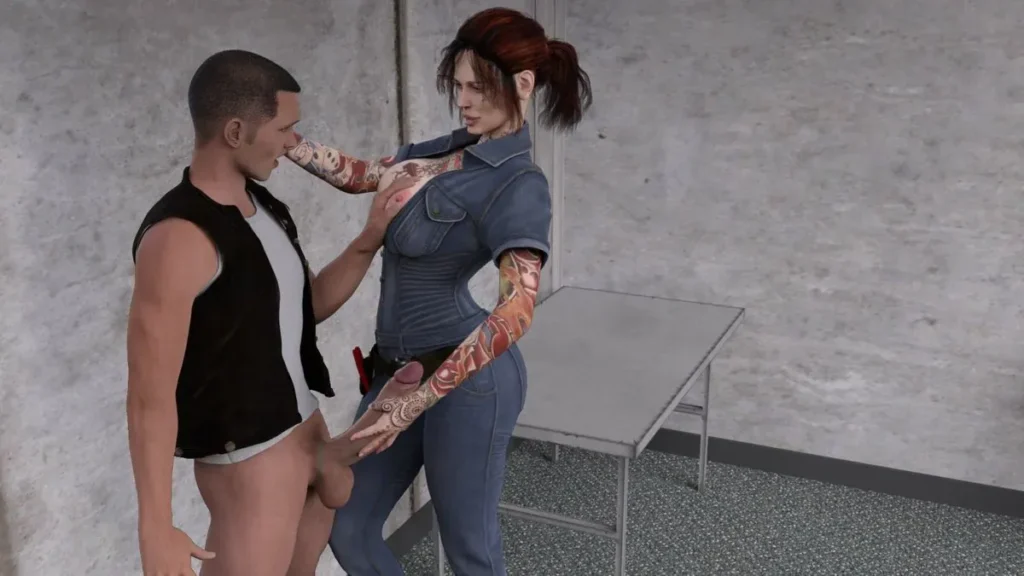



Time Loop Hunter review
Master the 15-day reset mechanics, character relationships, and multiple endings
Time Loop Hunter is an engaging role-playing experience that combines time manipulation mechanics with investigation elements and character-driven storytelling. Players assume the role of Jon, a 22-year-old protagonist who gains the ability to control a 15-day time loop through a brain-implanted device. This unique mechanic allows you to experiment with different choices, uncover hidden storylines, and shape relationships as you hunt a parasitic entity threatening people’s minds. Whether you’re new to the game or looking to optimize your playthrough, this guide covers everything you need to know about mastering Time Loop Hunter’s core systems and discovering all the game has to offer.
Understanding Time Loop Hunter’s Core Mechanics
Ever found yourself in a conversation in a game, said the wrong thing, and immediately wished you could rewind time to try again? In most games, you’re stuck with that regret. But in Time Loop Hunter, that’s not just a wish—it’s your primary weapon. 🎯 This game turns the classic “reload a save” concept into a breathtaking, brain-bending core mechanic. You’re not just playing a story; you’re sculpting it across multiple timelines, learning from every misstep, and using the very fabric of time to hunt a hidden threat.
At its heart, the genius of Time Loop Hunter mechanics lies in their seamless blend of freedom and consequence. You have the power to reset your reality, but every loop is a lesson that permanently enriches your understanding. It’s a game that rewards curiosity, punishes recklessness in the most instructive way, and makes you feel like a temporal detective. Let’s break down exactly how this incredible system works.
How the 15-Day Reset Framework Works
Imagine you have two weeks to stop a disaster, but you know almost nothing about it—who’s behind it, where it will happen, or how to prevent it. That’s your starting point. The 15-day reset system is the game’s master clock and the canvas on which you’ll paint all your experiments.
From the moment your character awakens with a mysterious neural implant, the countdown begins. You have 15 in-game days to investigate the town of Chronos Point, befriend (or alienate) its residents, and uncover the truth about the parasitic entity hunting that lurks in the shadows. When day 15 concludes—whether in success, failure, or your untimely demise—the loop resets. You snap back to day one, sunrise on your first morning, but you remember everything.
Think of each loop not as a failure, but as a dedicated research run. One loop might be solely for mapping the town’s secret passages. Another could be dedicated to learning a single character’s deepest secret.
This is where the time manipulation gameplay truly shines. The reset isn’t a punishment; it’s a tool. Here’s what carries over between loops:
* Your Player Knowledge: Everything you’ve seen, heard, and discovered remains in your mind. This is your most valuable currency.
* Key Codex Entries: Certain fundamental clues about the entity, its nature, and historical events get permanently logged.
* Skill Instincts: While raw skill points may reset, the understanding of how to solve certain puzzles or approach situations becomes second nature.
For example, in my first playthrough, I spent an entire loop just gaining Mayor Thornton’s trust, only to discover he was a dead-end lead. That felt like 15 days “wasted.” But in the next loop, because I knew that, I could bypass his lengthy dialogues entirely, saving precious days to investigate the suspicious librarian instead. That’s the power of the 15-day reset system—it transforms wasted time into strategic intelligence. 🔄
The beauty is in the layering. Early loops feel overwhelming. There’s so much to do! But soon, you’ll develop a personal strategy. Maybe you do a “social loop” to gather passwords and personal stories, followed by a “breaking and entering loop” to use that information while everyone is distracted by the town festival. The Time Loop Hunter mechanics encourage this methodical, layered approach to discovery.
Time Manipulation and Decision-Making Systems
So, you have a time loop. But how do you interact with it moment-to-moment? This is where your brain implant comes in, enabling a deliciously tactical form of time manipulation gameplay.
The implant grants you two key abilities: Temporal Echo and Momentary Revert. Temporal Echo lets you briefly slow time around you, perfect for examining a fleeting clue (like a disappearing shadow), dodging an unexpected attack, or listening in on a fast, hushed conversation across a crowded market. Momentary Revert is your “local rewind.” Made a wrong turn in a dialogue tree? Said something that made an NPC storm off? You can rewind the last 30-60 seconds of your own personal timeline to try again, at the cost of some of your implant’s energy.
This creates a fascinating decision-making system. You can micro-correct small errors, but the major branching paths of the story are locked behind the full 15-day reset. This means you can perfect a single conversation, but changing the outcome of a multi-day sequence of events requires a new loop.
The true weight of your choices is revealed across loops. A decision that seems minor in Loop 3 might open a critical door in Loop 7. To illustrate, let’s look at how different approaches to the same event can ripple out:
| Your Decision (Day 4) | Immediate Consequence | Long-term Consequence in a *Future* Loop |
|---|---|---|
| Help Felix find his lost drone in the woods. | Gain his gratitude; he gives you a small trinket. | In a later loop, Felix, remembering your past kindness (which you haven’t shown *this* loop), may voluntarily give you access to his father’s off-limits workshop, revealing a major clue. |
| Ignore Felix’s request to focus on another clue. | Felix is disappointed, but no immediate penalty. | In a later loop, Felix is cold. The workshop door remains locked, forcing you to find a much harder, riskier alternative path to the same clue. |
| Scold Felix for flying the drone near private property. | Felix becomes hostile; you lose a potential ally. | In a future loop, Felix might actively sabotage your investigation, spreading rumors that make other townsfolk distrust you. |
This decision-making system teaches you that every interaction is an investment. There are no truly “neutral” NPCs. The person you dismiss as a background character in one loop could be the key witness in another. My biggest “aha!” moment came when I finally, after four loops, learned the secret handshake of the old sailors’ guild. In the very next loop, I used that knowledge on day two, unlocking a whole subplot about strange happenings at the lighthouse that I never knew existed! 🚤
The implant’s abilities make the time manipulation gameplay feel active and engaging. You’re not just waiting for the loop to end; you’re constantly using small-scale time tricks to gather more intel within a single cycle, making each loop more productive than the last.
Investigation Elements and Puzzle Solving
This isn’t a game where clues glow yellow. The investigation elements Time Loop Hunter employs are immersive, logical, and deeply tied to the loop mechanic. You are a hunter, and the town is your crime scene—one that resets every 15 days, forcing you to be meticulous.
Hunting the parasitic entity is less about combat and more about forensic deduction. The entity is a master of disguise and manipulation, often influencing townsfolk rather than confronting you directly. Your job is to spot the anomalies—the person acting out of character, the object that wasn’t there yesterday (or in the last loop), the story that changes slightly in different timelines.
Puzzle solving Time Loop Hunter style is brilliantly integrated into the world. A puzzle isn’t a standalone block-matching minigame; it’s a lock on a diary you found in a previous loop, requiring a password you heard two resets ago. It’s aligning the town’s clock tower mechanism based on star patterns you only recorded during the clear sky of Loop 5.
Here is a step-by-step guide for effective investigation strategies I’ve developed through painful trial and temporal error:
- The Scout Loop: 😎 Your first reset should be pure exploration. Talk to everyone, but make no major commitments. Note when and where key events happen. Map the town’s daily rhythms. This loop is for building your personal timeline of events.
- Specialize Your Loops: 🎯 Dedicate each subsequent loop to one thread. “This is the loop I get close to the reclusive artist.” “This loop, I break into the town archives at night.” This focused approach prevents you from becoming overwhelmed and ensures deep progress on specific fronts.
- Take Manual Notes: 📖 The game’s log is good, but your real-world notepad (or a digital doc) is better. Jot down patterns: “The black cat appears at the fountain ONLY on rainy days after 3 PM.” This meta-knowledge is your cheat code.
- Leverage “Future” Knowledge Proactively: 🧠 In a new loop, use information from a past loop immediately. Walk up to an NPC and say the thing you know will gain their trust fast, bypassing hours of gameplay. This is the ultimate reward of the 15-day reset system.
- Test Boundaries: ⚡ Use a loop to do the “crazy” thing—accuse someone publicly, set off an alarm, follow the suspicious figure into the obviously dangerous basement. See what happens. The loop protects you from permanent failure, so embrace the role of the temporal scientist.
The investigation elements Time Loop Hunter weaves together create a satisfying “click” when things fall into place. You’ll experience moments where a clue from three loops ago finally makes sense in context with a document you found yesterday, pointing you to a location you can only access at dawn tomorrow. It makes you feel genuinely intelligent.
Mastering these Time Loop Hunter mechanics—the relentless tick of the 15-day reset system, the tactical time manipulation gameplay, the deep investigation elements, and the consequential decision-making system—is what transforms you from a confused victim of time into its master. You stop fearing the reset and start orchestrating it, using each repeated span of days to peel back another layer of Chronos Point’s mystery. The loop is no longer your prison; it’s your most powerful tool in parasitic entity hunting and the key to mastering the art of puzzle solving Time Loop Hunter demands. Now, get out there and start your next loop. This time, you know exactly what to do. ⌛
Time Loop Hunter stands out as a unique role-playing experience that masterfully blends time manipulation mechanics with meaningful character development and investigation gameplay. The 15-day reset framework creates a dynamic environment where your choices genuinely matter, allowing you to experiment freely while building relationships that shape the narrative in profound ways. By understanding the core mechanics, strategically developing Jon’s character, and embracing the game’s replayability through multiple endings and hidden storylines, you’ll unlock the full potential of this engaging adventure. Whether you’re drawn to the investigation elements, the character-driven storytelling, or the freedom to explore alternative paths, Time Loop Hunter rewards thorough exploration and thoughtful decision-making. Start your first playthrough with curiosity, pay attention to how your choices ripple through the story, and don’t hesitate to restart loops to discover new outcomes and hidden content that await.