Short Sad Stories
Play Short Sad Stories
Short Sad Stories Screenshots



Short Sad Stories review
Discover how this unique interactive experience redefines emotional gaming through meaningful choices and poignant narratives
Short Sad Stories stands as a distinctive interactive game that fundamentally reimagines what emotional storytelling can achieve in gaming. Rather than pursuing traditional victory conditions or happy endings, this experience invites players into a world where choices matter not for changing outcomes, but for deepening emotional understanding. The game masterfully blends interactivity with inevitability, creating moments where simple actions—like placing a photograph in a box—carry profound emotional weight. Whether you’re exploring environments, piecing together clues, or making meaningful decisions, Short Sad Stories offers a journey centered on witnessing, empathizing, and comprehending rather than winning. This guide explores what makes this interactive narrative experience so compelling and why it resonates deeply with players seeking meaningful emotional connections through gaming.
Understanding the Gameplay Mechanics of Short Sad Stories
Ever picked up a controller expecting to win, only to find a game that asks you instead to feel? 😢 That’s the beautiful, gut-wrenching surprise of Short Sad Stories gameplay. This isn’t about defeating bosses or collecting coins; it’s an intimate, narrative-driven game experience that uses its mechanics not as tools for conquest, but as instruments for introspection. The genius of its interactive game design lies in a profound redefinition of player agency in storytelling. You have immense power here—not to alter fate, but to deepen your relationship with it. Let’s pull back the curtain on how these emotional game mechanics work together to create something truly unforgettable.
How Interactive Choices Shape Your Emotional Journey
In most games, a choice is a branch on a tree. Pick A, and the story goes left. Pick B, and it goes right. The goal is control, and the thrill is in seeing the different outcomes. Short Sad Stories dismantles this expectation entirely. Here, your emotional narrative choices are less about steering the car and more about deciding what you notice on a predetermined road trip. The destination might be fixed, but your emotional arrival is entirely your own.
Think of it like this: you’re navigating a character’s life in the aftermath of a loss. The game might present you with two objects in a dusty attic—a faded concert ticket and a broken watch. A traditional game might label these “Keep” or “Discard,” affecting a loyalty meter or changing an ending. In Short Sad Stories, the choice is simply “Look Closer.” 🕵️♀️ You choose which memory to inhabit. Examining the ticket might plunge you into a vibrant, joyful memory of a shared night, full of laughter and music. Choosing the watch might reveal a tense, silent argument about being late, charged with unspoken regret.
The interactive storytelling game mechanics are engineered for reflection, not redirection. You are not choosing what happened; you are choosing what to ponder. This is where true player agency in storytelling flourishes. Your agency is over your own attention and emotional focus. By curating which moments you engage with most deeply, you are essentially writing the subtext of the story, building a unique psychological profile of the characters and their relationships that another player might see differently.
I remember one playthrough where I became fixated on every object related to a character’s hobby. My version of the story became about lost passion and abandoned dreams. A friend focused solely on items related to communication—unsent letters, a silent radio. His experience was a tragedy of things left unsaid. We witnessed the same core events, but the emotional narrative choices we made crafted completely different heartaches. This is the core of the Short Sad Stories gameplay loop: your decisions change the story’s meaning, not its plot.
The Role of Environmental Exploration and Item Curation
If choices are the verbs in this emotional sentence, then the environment is the hauntingly beautiful noun. 🏚️ Exploration in Short Sad Stories is slow, deliberate, and deeply tactile. You aren’t looting a space for resources; you’re archaeologizing a life for context. Every empty room, every half-open drawer, is a silent narrator. The interactive game design turns the very act of looking into a poignant mechanic.
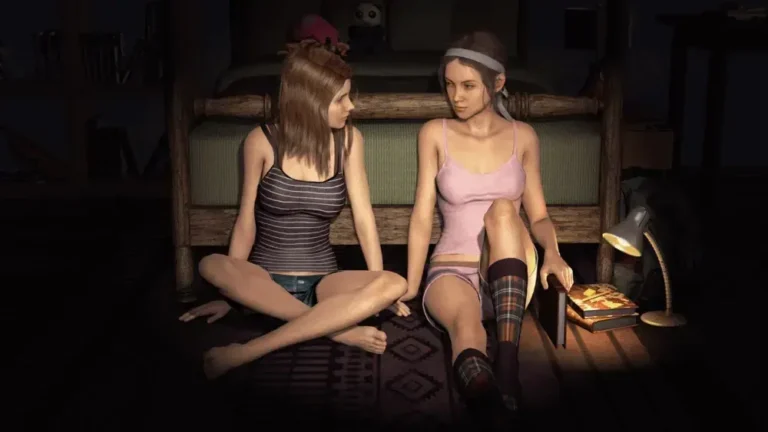
Central to this is the process of item curation. You’ll often be tasked with “cleaning” a space—a childhood bedroom, a shared apartment. The game presents you with artifacts of a past life: a worn-out teddy bear, a stack of old magazines, a coffee mug with a faded joke. The mechanic is simple: you can place an item in a “Keep” box or a “Discard” bin. But here’s the catch: the narrative consequence is purely internal. Discarding that teddy bear doesn’t unlock a new area or please a character. It simply forces you to enact the letting go.
This creates a powerful, bittersweet catharsis. The physical act of dragging an item to the discard pile, watching a brief, slow animation of it being placed inside, feels weighty. You are performing the emotional labor of the story. I spent nearly ten minutes hovering over a simple, chipped plate once. It wasn’t special. But in the context of the story, it was the plate used for weekly breakfasts. Keeping it felt morbid, like preserving a ghost. Discarding it felt like an erasure. This interactive storytelling game mechanics of curation forces you to sit with the weight of memory, making you an active participant in the story’s central themes of loss and preservation.
“I’ll never forget the moment the game made me slowly, manually fold a blanket. There was no button prompt to skip it. My character just… performed this slow, tender, heartbreaking action. In that silence, with just the sound of fabric, the entire loss crashed over me. It was a small animation that created the biggest emotional impact of my playthrough.” – A player’s testimonial.
These mandatory, deliberate actions—folding the blanket, placing a book on a shelf, closing a window—are masterstrokes of emotional game mechanics. They slow you down, breaking the “gamer” instinct to rush and solve. They embed the feeling of the narrative into your muscles. You don’t just learn about grief; you perform its daily rituals.
Memory Sequences and the Power of Repetition with Variation
This is where the interactive game design of Short Sad Stories becomes truly ingenious. 🧠 Throughout your journey, you will trigger memory sequences—vivid flashbacks to key moments. You might experience a happy memory of a picnic, full of warmth and color. Later, after you’ve uncovered more context, the game will guide you back to that exact same memory. Only this time, the emotional narrative choices you’ve made and the environmental clues you’ve found will layer new meaning onto it.
The first time, you see the smiles. The second time, you notice the character forcing that smile, or the storm clouds gathering in the distance, or the way they avoid a certain topic. The sequence is mechanically identical, but your perception has been altered. You are not replaying to find a hidden item or a secret path; you are replaying to witness the permanence of the moment and the fragility of your own first understanding.
This mechanic of “repetition with variation” brilliantly mirrors how real memory works. We revisit past moments with new eyes, our present knowledge coloring what we recall. The game uses this loop to solidify its core truth: some things are unchangeable. The past is fixed. Your power lies not in rewriting it, but in comprehending its full, painful, beautiful complexity. This shift is fundamental to the Short Sad Stories gameplay philosophy. The player’s goal transitions from achievement-focused (win, unlock, complete) to comprehension-focused (understand, empathize, accept).
To see how these mechanics weave together to create distinct emotional journeys, let’s break it down:
| Story Arc Theme | Core Interactive Mechanics | Emotional Payoff & Player Goal |
|---|---|---|
| Loss & Letting Go | Item curation (Keep/Discard), slow environmental interaction, emptying physical spaces. | Bittersweet catharsis through performed acceptance. The goal is to emotionally process the act of moving on. |
| Regret & Missed Chances | Replaying memory sequences with new context, examining “path not taken” items (e.g., an unsent letter). | Deepened understanding of past failure. The goal is not to fix it, but to acknowledge its weight and learn from its silence. |
| The Haunting of Daily Rituals | Mandatory, slow animations for mundane tasks (making tea, fixing a chair). Environmental storytelling of habitual spaces. | Embodied melancholy. The goal is to feel the ghost of routine, making absence palpable in everyday actions. |
| Piecing Together Truth | Non-linear exploration, connecting disparate clues (a note here, a photo there) to form a narrative whole. | The satisfaction of emotional deduction. The goal is to become the detective of a heart, solving the “why” behind the pain. |
Ultimately, the magic of Short Sad Stories is how it uses its interactive storytelling game mechanics to make you a collaborator in sadness. 😌 It draws a clear, brave line between having choices and having control. You are given all the tools of agency—choice, exploration, interaction—but they are directed inwards. This narrative-driven game experience isn’t about changing the story’s ending; it’s about letting the story change you. Every quiet choice, every examined trinket, every revisited memory is a step on a journey from passive observer to active feeler. That is the revolutionary heart of its Short Sad Stories gameplay: it’s a game that you don’t win, but that you complete, leaving you not with a trophy, but with a profound, hard-earned piece of understanding.
Short Sad Stories represents a paradigm shift in how interactive games can deliver emotional experiences. By prioritizing emotional comprehension over traditional gameplay achievements, the game creates a space where players genuinely witness and empathize with narratives rather than simply progressing through them. The carefully designed mechanics—from item curation to memory sequence replaying—work in concert to deepen emotional understanding with each interaction. What makes this experience truly distinctive is its recognition that the most powerful gaming moments aren’t always about player control, but about meaningful participation in a story that moves us. If you’re seeking a game that challenges conventional gaming expectations and offers genuine emotional depth, Short Sad Stories invites you to experience interactive storytelling at its most poignant and transformative.