
Grandma’s House
Play Grandma’s House
Grandma’s House Screenshots







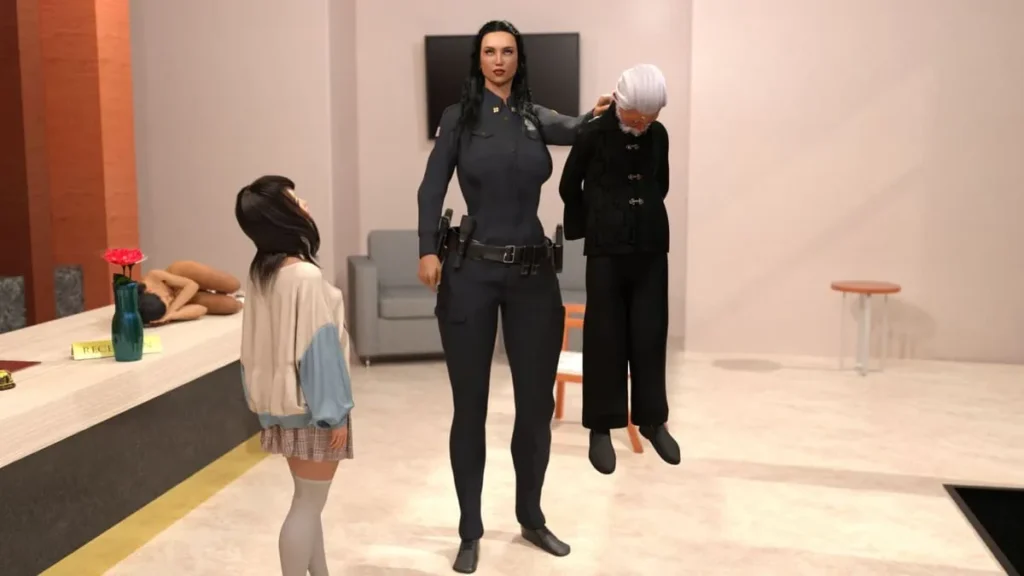


















Grandma’s House review
Explore character relationships, quest mechanics, and progression systems in this narrative-driven experience
Grandma’s House stands out as a narrative-rich adult visual novel that emphasizes character development and relationship building over rushed interactions. Developed by MoonBoxGames, this game prioritizes meaningful progression where characters like Polly, Allie, and others require time to develop trust and emotional connection with the protagonist. Unlike many titles in the genre, Grandma’s House focuses on creating authentic character arcs where relationships evolve naturally through dialogue choices, quest completion, and strategic decision-making. Whether you’re new to the game or looking to optimize your playthrough, understanding the core mechanics and character dynamics is essential for a rewarding experience.
Understanding Grandma’s House Gameplay Mechanics
So, you’ve moved into Grandma’s House, ready for a summer of… well, let’s call it “complicated” family bonding. You boot up the game, meet the colorful cast, and suddenly you’re hit with a wave of systems: quests popping up, characters with shifting moods, an inventory filling with mysterious items, and stats you’re not quite sure how to manage. 🏠😅
If your first hour was anything like mine, you probably ran around clicking on everything, saying the wrong thing to Polly, and completely missing time-sensitive events. I remember spending my first in-game day just trying to figure out how to use that darn snooper, only to realize I’d missed my window to talk to Sarah entirely! The beauty—and initial challenge—of Grandma’s House gameplay mechanics is that they mirror real-life social dynamics. Nothing is handed to you on a silver platter; you have to listen, remember, and be present.
This chapter is your roadmap. We’re going to peel back the layers of its elegant systems, so you can spend less time fumbling and more time immersed in its rich, narrative-driven world. Let’s get you from confused newcomer to a savvy resident who knows how to navigate quests, build meaningful bonds, and manage resources like a pro.
Core Quest System and Progression Structure
At its heart, Grandma’s House is a game about stories, and its quest system is the engine that drives those stories forward. Forget the endless checklists of a typical RPG; here, quests feel like organic problems waiting for your intervention. They aren’t just tasks; they are opportunities to learn about the characters and the house’s secrets.
Quests are typically initiated through conversation. A character might mention they’re looking for something, worried about someone, or planning an event. The game’s journal is your best friend here, as it automatically logs these hints and objectives. However, it won’t always spell out the “how.” Figuring out the “how” is the core puzzle. This might involve:
* Eavesdropping on the right conversation at the right time.
* Finding a key item you recall someone mentioning days prior.
* Speaking to another character to get a missing piece of the puzzle.
The most critical Grandma’s House gameplay mechanics to master here are time and location. The house and its inhabitants operate on a very specific schedule. Want to progress a quest about fixing the garden shed? You’ll likely need to find the character involved during their “free time” between 9:00 and 18:00. Many crucial, relationship-altering conversations happen in the evening window, from 19:30 to 20:00. Showing up at the right place at the right time isn’t just helpful—it’s essential.
Pro Tip: The game autosaves at the start of each new day. Before you end your day (by going to bed after 20:00), make a hard save. If you realize tomorrow that you missed a vital time window, you can reload and fix your schedule without losing a whole day’s progress.
Understanding this flow is the first step in learning how to complete quests efficiently. Rushing rarely pays off. Instead, practice observation. Listen to dialogue, note where people are at different times, and let objectives simmer in the background while you work on other relationships. Often, the solution to one character’s quest will reveal itself while you’re helping another.
Here’s a step-by-step checklist for tackling major story quests:
- Listen & Log: When a character gives you a quest or hint, open your journal immediately. The detail is often in the phrasing.
- Identify the Lock and Key: What’s the obstacle? A missing item? A reluctant character? The “key” is usually a person, an item, or a piece of information found elsewhere.
- Pin the Time and Place: Note if the character mentioned a specific time (“I’m usually in the kitchen in the morning”) or if the quest item is in a location with access hours.
- Gather Intel: Talk to other characters. Sometimes, Uncle Bob might have a useful clue about Aunt Mary’s problem.
- Execute: With the right item, information, and timing, approach the quest-giver or the target location to trigger resolution.
- Embrace the Ripple Effect: Completing a quest almost always changes your relationship progression with the involved characters and unlocks new narrative branches.
Character Relationship Mechanics and Trust Building
If the quests are the plot, the characters are the heart. The character relationship progression system in Grandma’s House is a masterclass in subtlety and patience. You can’t simply spam gifts or choose the obvious flirtatious dialogue to win someone over. This is a game about trust building in Grandma’s House, and trust is earned in small, consistent increments.
Each character has invisible relationship meters and personal thresholds. Take Polly, for instance. My early mistake was being too direct, which she perceived as insincere or creepy. Her walls went up. I had to reset my approach: short, friendly chats over several days, helping her with small tasks (quests!), and demonstrating through actions that I was respectful and trustworthy. Only after this foundation was laid did she start to open up and share more personal stories.
This is governed by the game’s stat system mechanics. While not displayed as a traditional HUD, your actions influence core metrics like Lust, Love, and Sex Power. Think of them not as “points to grind” but as representations of the emotional and physical tone of your relationship.
* Lust might increase through certain risqué dialogue choices or discoveries.
* Love grows through acts of kindness, emotional support, and completing meaningful quests.
* Sex Power is a more unique stat that can influence the energy and outcome of intimate encounters.
Every dialogue choice is a brushstroke on this canvas. A choice that increases Lust with one character might decrease Trust with another. There’s no “perfect” path, only the path you create. The game’s philosophy is clear: relationships must develop naturally. You have to read the room, pay attention to a character’s current mood (they often wear their emotions on their sleeve), and choose responses that align with the bond you’re trying to build.
To give you a clearer picture of the journey, here’s a breakdown of the typical relationship tiers:
| Relationship Tier | Trust/Key Metric Threshold | What Unlocks | Typical Time Investment |
|---|---|---|---|
| Acquaintance | Initial Meeting | Basic greetings, very general conversation topics, initial low-stakes quests. | Day 1-2 |
| Developing Friendship | Low-to-Mid Trust | More personal dialogue options, willingness to share minor secrets or problems (quests), longer conversations. | Several days of consistent positive interaction |
| Close Bond / Intimate | High Trust, Elevated Lust/Love | Private conversations, deep personal revelations, access to character-specific locations or items, romantic or intimate story paths. | Weeks of in-game time, often dependent on completing key personal quests |
| Deeply Connected | Maxed Trust & Love | Full access to a character’s story arc, life-changing conversations, and the potential for definitive, relationship-shaping conclusions. | Requires near-total dedication to that character’s path over the entire summer |
Inventory Management and Item Collection
Your backpack is more than just a holder for junk; it’s a toolbox for social engineering and problem-solving. A smart inventory management guide is crucial because space is limited, and every item has a potential purpose. 🎒✨
Items generally fall into a few categories:
* Quest Items: The golden key for the attic, a lost heirloom, a specific book. These are usually non-negotiable keeps until you hand them off.
* Tools: The snooper is the most famous. This device lets you listen in on private conversations through walls or doors, often revealing vital quest clues or character insights. Upgrading it (through quests) increases its range and clarity.
* Consumables & Contextual Items: Some items might be used to alter a scene or a stat in a specific moment. Others might be gifts, but remember—giving a character something at the wrong time can backfire!
The key to inventory management is intentionality. Don’t pick up everything just because you can. Ask yourself:
1. Has anyone mentioned needing this?
2. Does this look like it belongs to a specific character?
3. Is this a tool (like the snooper) I should always carry?
I learned this the hard way. I hoarded every knick-knack, and when I finally found the item Sarah desperately needed, my inventory was full. I had to painfully discard things, only to later discover one of them was a clue for another quest! Now, I do a daily inventory check. If an item hasn’t been relevant in 2-3 days and isn’t a key tool, I might store it in my room (if it’s not a unique quest item) or just leave it be.
This system ties directly back into the Grandma’s House quest system and stat system mechanics. Using the snooper to gain blackmail material might boost your leverage (affecting hidden social power stats) but could crater your Trust with that character if discovered. Finding and returning a personal diary will send Love and Trust soaring. Your inventory is your arsenal for manipulating the delicate social ecosystem of the house, for better or worse.
Putting It All Together: The Symphony of Systems
The magic of Grandma’s House’s design is how these systems—quests, relationships, inventory—intertwine. A quest builds trust. Increased trust unlocks new dialogue. New dialogue hints at a hidden item. That item clears an inventory slot for a tool needed for another character’s quest. It’s a beautiful, self-reinforcing loop.
The ultimate advice for mastering Grandma’s House gameplay mechanics is to slow down. Be curious. Talk to everyone, every day, but listen more than you speak. Use your journal. Respect the clock. And most importantly, let the stories unfold at their own pace. Your patience in building trust and your attention to detail in managing your quests and inventory will be rewarded with one of the most rich and emotionally engaging narrative experiences available. Now, go enjoy your summer. It’s going to be unforgettable. 🌻❤️
Grandma’s House delivers a unique experience within the adult game genre by prioritizing character authenticity and relationship depth. The game’s deliberate pacing, where characters like Polly and Allie develop trust gradually rather than instantly, creates more meaningful interactions and lasting emotional investment. By understanding the quest system, relationship mechanics, and time-based progression, players can navigate the game world more effectively and appreciate the nuanced character development that sets Grandma’s House apart. Whether you’re exploring the various character storylines or optimizing your playthrough for specific outcomes, mastering these core mechanics enhances your overall experience and allows you to fully appreciate the narrative complexity the developers have crafted.